Scalable Ways to Generate Wholesale Real Estate Leads (Without Cold Calling)
For many real estate wholesalers, the “hustle” is synonymous with cold calling. The image of an investor spending eight hours a day on a triple-line dialer, facing rejection after rejection, has become a stereotype of the industry. While cold calling can work, it is increasingly difficult in 2026. Stricter Do Not Call (DNC) regulations, AI-powered call screening on smartphones, and the sheer mental toll of constant rejection make it a strategy that is hard to scale and even harder to sustain.
The good news is that the modern real estate landscape offers several powerful alternatives. You can build a thriving wholesaling business without ever picking up the phone to call a stranger. This article explores five scalable ways to generate high-quality leads that allow you to focus on closing deals rather than managing a call center.
1. Inbound Real Estate SEO (Search Engine Optimization)
The most sustainable way to generate leads is to have them come to you. By creating a content-rich website that answers the questions motivated sellers are asking, you can build an “inbound” lead machine. When a homeowner searches for “how to sell my house fast for cash” or “what to do with a distressed property,” your site should be there to provide the answer.
While SEO takes time to build—often 6-12 months before seeing significant results—the long-term ROI is unmatched. Once your content ranks on the first page of Google, it continues to generate leads 24/7 without any additional cost per click. This is the ultimate form of scalability because your “digital assets” do the work for you while you sleep.
2. High-Precision Direct Mail
Direct mail has seen a resurgence in 2026 as digital channels become increasingly crowded. The key to successful direct mail is precision. Instead of “blanket” mailing an entire zip code, you use data to target specific lists: absentee owners with high equity, probate properties, or homeowners with tax liens.
In 2026, the average response rate for highly targeted direct mail is approximately 4.4% [1]. While the cost per mailer can be significant, the quality of the leads is often much higher than digital ads. Because a physical postcard requires the homeowner to take a deliberate action to contact you, the “intent” of the lead is usually very strong.
3. Targeted Social Media and Paid Ads
If you need leads now, paid advertising on platforms like Facebook, Instagram, and Google is the fastest way to get them. These platforms allow for incredibly granular targeting. You can show your ads specifically to people who have recently visited real estate sites or are searching for debt relief options.
The challenge with paid ads is the cost and the need for constant optimization. In 2026, the competition for “seller” keywords is fierce, and a poorly managed campaign can quickly drain your budget. However, for an investor with a proven sales process, paid ads offer a “faucet” of leads that can be turned up or down as needed to meet your deal-flow goals.
4. Wholesaler Networking and Co-Wholesaling
You don’t always have to be the one who finds the deal. By building a strong network of other wholesalers, you can gain access to “co-wholesaling” opportunities. In this model, you help another wholesaler find a buyer for their deal and split the assignment fee.
This method is highly scalable because it leverages other people’s lead generation efforts. It is particularly effective if you have built a massive, high-quality “cash buyers list.” While your profit per deal is lower, the effort required to close a co-wholesale deal is often a fraction of what it takes to find an off-market deal from scratch.
5. AI-Powered Virtual Driving for Dollars
The most innovative and cost-effective way to generate leads in 2026 is Virtual Driving for Dollars (VDD) combined with AI-powered analysis. This method combines the high-intent nature of physical distress with the scale of digital automation.
By using tools like Distress Meter AI, you can analyze thousands of properties for signs of visual distress (e.g., peeling paint, overgrown yards, damaged roofs) without ever leaving your desk. This creates a “warm” lead list of properties that are demonstrably in need of repair.
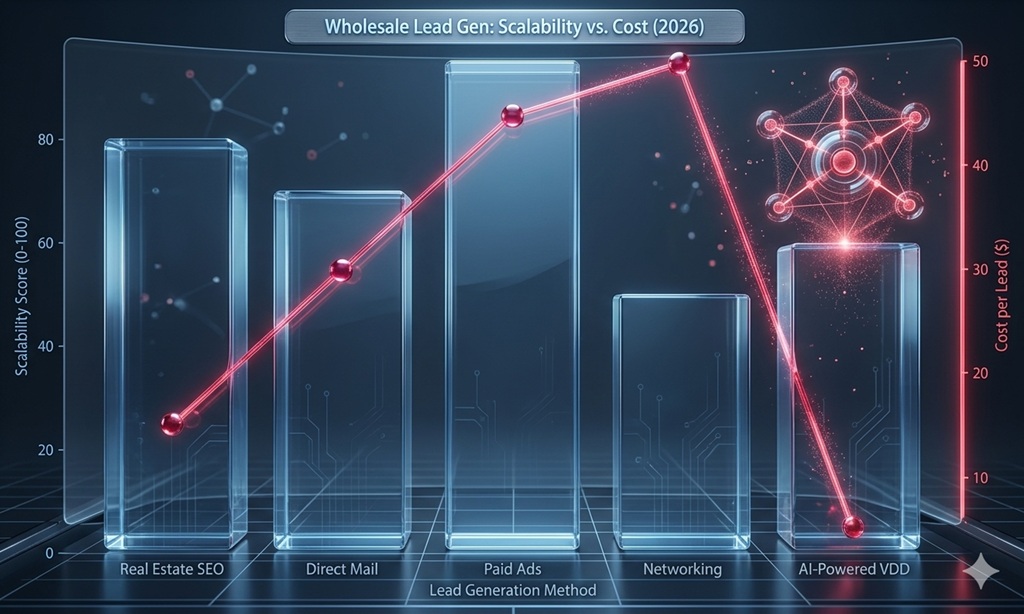
| Method | Scalability | Cost per Lead | Speed to Result | Manual Effort |
|---|---|---|---|---|
| SEO | High | Low (Long-term) | Slow | Medium |
| Direct Mail | High | High | Medium | Low |
| Paid Ads | Very High | Very High | Fast | Low |
| Networking | Medium | Medium | Medium | Medium |
| AI-Powered VDD | Very High | Low (<$5) | Fast | Low |
Why AI-Powered VDD is the “Sweet Spot”
As shown in the comparison above, AI-powered VDD offers a unique combination of high scalability, low cost, and fast results. While SEO is great for the long term and paid ads are great for immediate volume, they both require either a lot of time or a lot of money.
Distress Meter AI allows you to bypass the “cold” part of lead generation. Instead of calling random lists, you are reaching out to owners of properties that physically show they need help. This “visual evidence” of distress is a powerful conversation starter and significantly increases your chances of finding a motivated seller without the need for high-pressure cold calling.
Conclusion: Diversify Your Lead Generation
The most successful wholesaling businesses in 2026 don’t rely on a single source of leads. They combine multiple “no-cold-call” strategies to ensure a consistent pipeline of deals.
By integrating Distress Meter AI into your workflow, you gain a massive competitive advantage. You can find more distressed properties in more markets, at a lower cost, than any of your competitors who are still stuck on the phones. It’s time to stop dialing and start scaling.
References
[1] MyDoceo.com. Direct Mail Response Rates 2026: Data That Proves It.